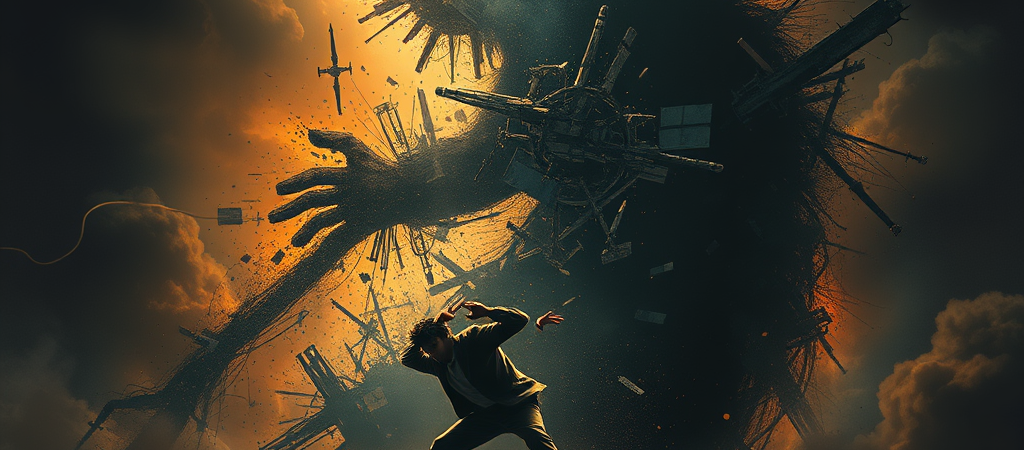
Steven Pressfield’s The War of Art: Break Through the Blocks and Win Your Inner Creative Battles has become one of the most cited, gifted, and passionately discussed books in the world of creativity and productivity. First published in 2002, the book has taken on an almost mythic status among writers, entrepreneurs, athletes, innovators, and anyone who has attempted to turn aspiration into achievement. Its cult following grows each year, propelled by the book’s unusual combination of practical clarity, philosophical weight, and almost spiritual insistence that creative work is not merely optional—it is a calling.
Yet The War of Art is not a typical guide to creativity, nor is it a how-to manual on writing, business, or discipline. Instead, Pressfield frames creative struggle as a literal war—one fought not against external forces, but against an internal adversary he calls Resistance. With the economy of a seasoned novelist and the precision of a career Marine, he dissects the psychological battle that prevents people from doing the work they feel called to do. In the process, he elevates creativity from a hobby to a form of moral courage.
This review will examine the structure, themes, strengths, limitations, and legacy of Pressfield’s work, as well as its unusual impact on readers who may never have written a sentence or painted a canvas, but nevertheless recognize the inner battle he so vividly describes.
I. The Core Argument: Resistance as the Enemy of Creativity
At the heart of The War of Art is a single concept: Resistance—Pressfield’s name for the invisible psychological force that stops people from pursuing their creative or meaningful goals.
Resistance is not laziness, he argues, nor is it lack of talent or external circumstance. Instead, it is a universal force, almost like gravity, that arises whenever we attempt something that stretches us beyond fear, comfort, or ego. Pressfield anthropomorphizes this force as cunning, ruthless, and tireless—a saboteur that uses procrastination, fear, distraction, perfectionism, self-doubt, drama, or any other tactic to derail us.
The brilliance of this framing lies in its emotional accuracy. Anyone who has attempted to write, start a business, get fit, change careers, or pursue any life-giving ambition will recognize the feeling: the sudden desire to check email instead of begin the project; the rationalizations that “today just isn’t a good day”; the sudden fatigue before a creative session; the belief that you need one more tool, one more plan, one more moment of inspiration.
By treating this behavior as an enemy rather than a personal failing, Pressfield offers readers a path out of shame and into strategy. Resistance is not your fault, he suggests—but defeating it is your responsibility.
This dichotomy between personal accountability and universal psychological struggle is one of the reasons the book resonates so widely. Creative people often believe they are uniquely flawed because they struggle to begin or sustain their work. Pressfield obliterates that illusion. You are not alone, he insists. Resistance comes for everyone. And once you can name your enemy, you can fight it.
II. Structure and Style: A Manifesto in Miniature Chapters
One of the most distinctive features of The War of Art is its structure. The book is divided into three major sections:
- Book One: Resistance – Defining the Enemy
- Book Two: Combating Resistance – Turning Pro
- Book Three: The Higher Realm – The Role of Inspiration and the Muse
Pressfield crafts each chapter as a short, almost aphoristic entry—some only a paragraph long, others a page or two. The effect is that the book can be read in a single sitting, but its ideas linger long after. The brevity also gives the text a sense of rhythm and urgency, as if each chapter is a punch thrown at Resistance itself.
His prose is terse, direct, and often martial in tone. There is little ornamentation and no academic jargon. Pressfield writes with the authority of someone who has lived the struggle he describes—a man who spent years failing to complete novels, working odd jobs, and battling self-doubt before finally finding his discipline and publishing The Legend of Bagger Vance at age fifty-two.
This autobiographical subtext, though never heavily emphasized, forms a key part of the book’s appeal. Pressfield does not preach from the mountaintop; he speaks from the trenches. His authority comes not from theory, but from survival.
III. Book One: Resistance – The Anatomy of Self-Sabotage
The first section is the most psychologically acute. Pressfield catalogs the many shapes Resistance takes, and in doing so, provides readers with a mirror. Fear, procrastination, rationalization, perfectionism, criticism, self-doubt, and even success can trigger Resistance.
One of the most powerful insights in this section is Pressfield’s argument that the more important a creative goal is to our soul’s evolution, the more Resistance we feel toward it. This reverses the conventional wisdom that fear means stop. Instead, fear becomes a compass—pointing us toward precisely the path we ought to follow.
Pressfield’s list of Resistance’s disguises reads like an inventory of the human condition:
- The fear of failure
- The fear of success
- The fear of being judged
- The delusion that inspiration will arrive before we sit down
- The belief that other people’s needs outrank our creative calling
- The addictive pull of distraction
- The seduction of busyness
- The lure of perfectionism, which he calls “a form of procrastination”
Several passages in this section have become legendary. For instance, his observation that “Resistance’s goal is not to wound but to kill” has been quoted in countless creative circles. His comparison of Resistance to a disease—predictable, universal, and treatable through discipline—helps demystify the panic many creatives feel when faced with a blank page or an ambitious project.
Some critics argue that the anthropomorphizing of Resistance borders on melodrama, but this misses the point. Pressfield uses metaphor not to exaggerate the difficulty of creative work, but to highlight its seriousness. Creativity, in his formulation, is not something cute or recreational. It is a battleground for the soul. And by portraying Resistance as a formidable adversary, he galvanizes the reader to action.
IV. Book Two: Turning Pro – Discipline as Liberation
The second section introduces the book’s most influential concept: the difference between an amateur and a professional.
Pressfield’s idea of a professional is not tied to money or status. Instead, it describes an inner orientation—a way of being. To turn pro is to commit to the creative calling with seriousness, discipline, and resilience. The professional does the work regardless of mood, fear, or inspiration. The amateur works when it’s convenient; the professional works because it is necessary.
Key traits of the professional, according to Pressfield, include:
- Showing up every day
- Committing for the long haul
- Accepting no excuses
- Mastering technique
- Preparing mentally
- Acting in the face of fear
- Accepting delayed gratification
- Treating creative work as work, not as therapy
- Maintaining a sense of detachment from outcomes
This section is arguably the most motivational and practical. Pressfield has a gift for framing discipline not as drudgery but as freedom. When we commit to a routine, he argues, we liberate ourselves from the tyranny of our moods. Consistency becomes a form of self-respect.
His use of the warrior metaphor becomes strongest here. The professional is not glamorous; instead, they are stoic, steady, uncomplaining. Pressfield’s admiration for the military (he served in the Marine Corps) shines through in his emphasis on grit and integrity.
Critically, Pressfield does not promise quick results. Instead, he emphasizes that professionalism is an identity forged over time. It is an ongoing practice. For many readers, this becomes a turning point: the realization that discipline is not a personality trait but a habit available to anyone.
V. Book Three: Inspiration, the Muse, and the Metaphysics of Creativity
The third section shifts tone dramatically. After the stark realism of the first two sections, Pressfield introduces a spiritual dimension grounded in classical mythology. He argues that creativity is a partnership between the human and the divine—that when we sit down to do our work, we invoke the Muse.
This metaphysical shift surprises some readers, but it is consistent with a long tradition of artists who have viewed inspiration as a sacred phenomenon. Pressfield cites Homer, the ancient Greeks, and the Renaissance masters to support his claim that creativity is a gift, but only given to those who prove themselves worthy through discipline.
The Muse, in his formulation, is not whimsical. She appears only when you do. Work, not desire, summons inspiration. Pressfield thus reconciles spirituality with practicality: yes, art comes from a higher realm, but that realm only opens its doors when you have shown up long enough to earn admission.
Whether one interprets this literally, metaphorically, or psychologically, the effect is powerful. Pressfield elevates the creative act from a personal ambition to a cosmic collaboration. For many readers, this section imbues the grind of daily work with meaning and reverence.
VI. Strengths: Why the Book Resonates
1. Emotional Accuracy
Pressfield’s depiction of inner creative struggle is precise, unflinching, and compassionate. Readers consistently report feeling “seen” by the book.
2. Brevity and Clarity
The short chapters and direct prose make the book fast to read and easy to reference.
3. Unusual Tone: A Blend of Practicality and Myth
By mixing military discipline with ancient spirituality, Pressfield creates a unique creative philosophy.
4. Universal Applicability
Although written for writers and artists, the book applies equally to entrepreneurs, athletes, students, and anyone attempting meaningful change.
5. Transformative Reframing
By personifying self-sabotage as Resistance, Pressfield gives readers a way to externalize their fear and regain agency.
6. Honest Perspective
Pressfield writes without pretense or academic posturing. His authority is experiential, not theoretical.
VII. Limitations: Where the Book Draws Critique
No book achieves cult status without generating some pushback, and The War of Art is no exception.
1. The Monolithic Concept of Resistance
Some critics argue that not all procrastination or fear stems from a singular internal force. Trauma, burnout, mental health issues, or socioeconomic limitations can shape behavior in ways the book doesn’t address. For individuals with depression, anxiety, or ADHD, the message “push through anyway” may land as reductionistic.
2. Lack of Practical Strategy
Although motivational, the book offers little in terms of step-by-step techniques. Readers looking for structured productivity systems will not find them here.
3. The Militaristic Tone
Pressfield’s framing of creativity as combat resonates with many but not with all. Some may find the war metaphor too aggressive or masculine for their taste.
4. The Spiritual Shift
The transition in Book Three into mystical territory can feel abrupt. Readers seeking psychological or scientific explanations may find the Muse metaphor overly romantic.
Despite these criticisms, few deny the book’s power. Even readers who disagree with aspects of Pressfield’s philosophy tend to acknowledge the book’s ability to catalyze action.
VIII. Legacy and Influence
The cultural impact of The War of Art is significant. It has influenced best-selling authors, CEOs, Hollywood screenwriters, musicians, military leaders, and Olympic athletes. Many claim it changed their career, helped them finish a novel, or clarified their sense of purpose.
The book has also become a staple gift within creative communities. It is the text writers give to aspiring writers, entrepreneurs give to new founders, and teachers assign to students who struggle with resistance.
Beyond its readership, the book has spawned sequels (Do the Work, Turning Pro, and The Artist’s Journey) as well as a broader conversation about the tension between discipline and inspiration in creative work.
But perhaps the greatest testament to its influence lies in the fact that terms like “Resistance” and “Turning Pro” have entered the vocabulary of the creative world. Pressfield gave people new language for old struggles. And with new language comes new possibility.
IX. Conclusion: A Modern Creative Classic
The War of Art endures because it speaks to a timeless truth: the greatest obstacle between us and the life we want is often ourselves. But instead of berating the reader, Pressfield arms them. He treats creative work with the seriousness it deserves and offers a psychological model that is at once confronting and empowering.
It is not an exhaustive guide to creativity, nor does it attempt to be. It is a manifesto—a call to arms. It urges its readers to stop waiting for permission and begin the work they were meant to do.
For anyone who feels stuck, blocked, afraid, or perpetually “not ready yet,” The War of Art remains one of the most powerful antidotes ever written. It is a book that does not simply inform—it challenges, provokes, and ultimately transforms.
Whether one accepts Pressfield’s metaphysics or his militaristic metaphors is secondary. What matters is his central argument: You are capable of far more than Resistance allows you to believe.
And if you show up—day after day, fear after fear—the Muse will meet you halfway.